
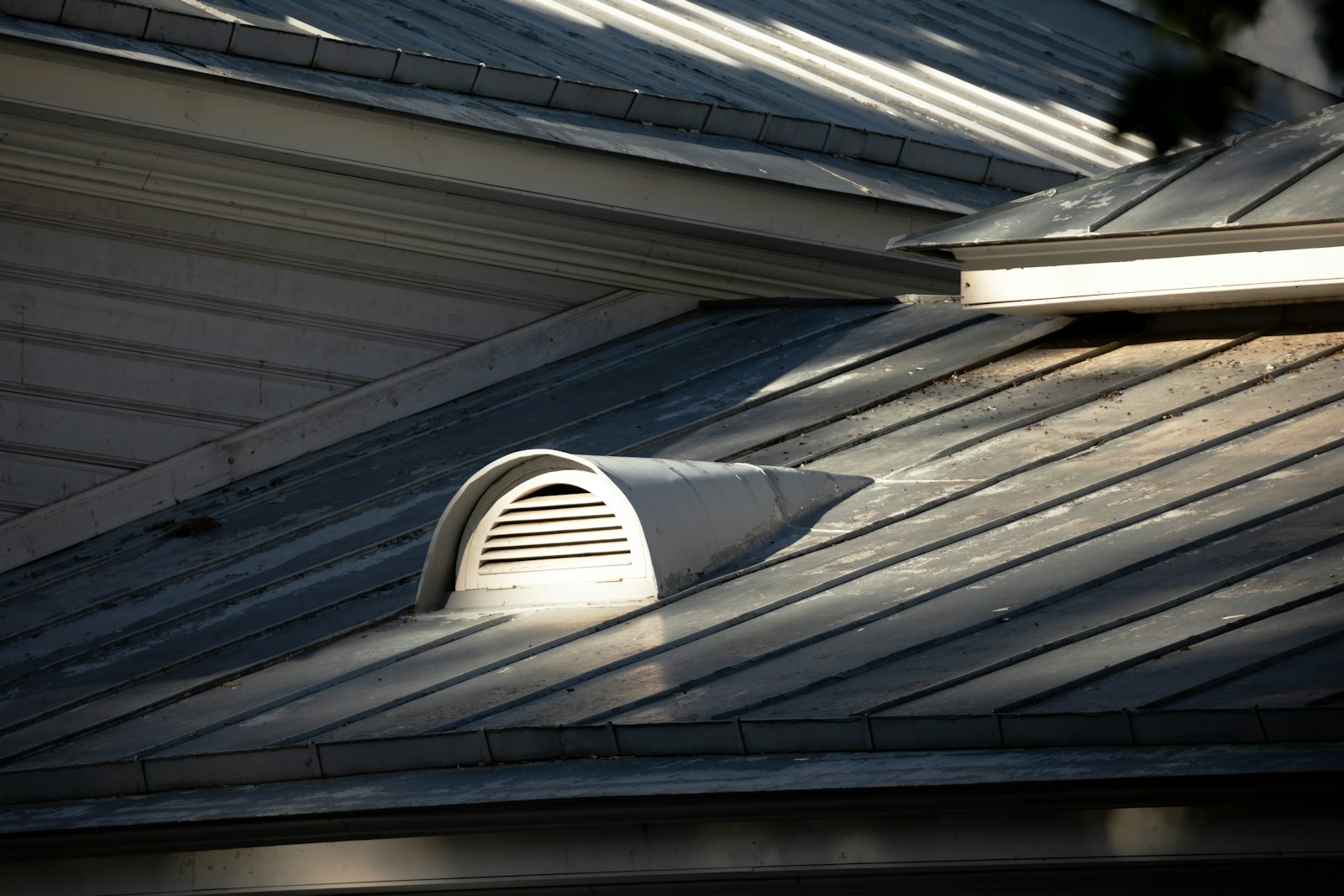
It is mid-afternoon in Celina, 101 in the shade, and about twelve feet above your kitchen there is a space running somewhere between 130 and 145 degrees. Your attic. All evening, that stored heat presses down through the insulation into your ceilings, which is a big part of why upstairs bedrooms will not settle down until close to midnight and why the A/C keeps working long after the sun is gone.
Here is the part most homeowners never hear: an attic is not supposed to be cool, but it is absolutely supposed to breathe, and a surprising share of attics, including plenty in brand-new homes, are not breathing anywhere near what the design calls for. The good news is that the system is simple once you can picture it, checking yours takes about twenty minutes with zero roof-walking, and the most common fix is one of the cheapest comfort upgrades in the entire house.
How an attic is supposed to breathe
Healthy attic ventilation is a continuous loop. Cooler outside air enters low, through the perforated soffit vents under your eaves. It warms inside the attic, rises, and exits high, through vents at or near the ridge. No fans, no electricity, just warm air doing what warm air does, all day long. The rule of thumb builders work from is about one square foot of net free vent area for every 300 square feet of attic floor, split roughly half low and half high, and double that when intake and exhaust are not balanced.
That balance matters more than the totals. Exhaust vents can only move the air the intake supplies. An attic with a generous ridge vent but blocked soffits does not simply vent less; it starts pulling air from wherever it can find it, and often that is the inside of your house, drawn up through can lights, ceiling fixtures, top plates, and the attic hatch. At that point your attic is exhausting air you paid to cool.
The four exhaust types on Celina roofs
Ridge vents
A continuous slot cut along the peak, covered by a low-profile cap you can barely see from the street. This is what most new Celina roofs have, and when it is paired with open soffits it is the best passive system available: silent, no moving parts, working in any wind direction, along the entire length of the roof.
Turbine vents
The spinning "whirlybirds" you see on slightly older rooflines. Wind spins the turbine, which actively draws air out of the attic, and even on still days they behave like a large static vent. No electricity, decades of service life, and a solid choice where the ridge line is short or chopped up by hips and valleys. Their one aging habit is a squeaky bearing, which is a maintenance nudge, not a failure.
Static box vents
Simple covered openings installed near the ridge, sometimes called turtle vents. Each one moves a modest amount of air, so they work in teams. Nothing wrong with them; they are just the least powerful option per opening.
Powered attic fans
Electric or solar fans move the most air on paper, and this is where I will give you the honest builder take: bolted onto an attic with weak intake, a powered fan makes things worse. It has to pull air from somewhere, and with the soffits blocked, that somewhere is your living room, through every ceiling penetration in the house. You pay to run the fan, then pay again for the conditioned air it throws away. Most homes with a clear ridge vent and open soffits never need one.
Resist the urge to add a turbine or box vent to a roof that already has a ridge vent. Two different exhaust types on the same section short-circuit the loop: the lower vent becomes the path of least resistance and starts feeding the higher one, so air cycles peak-to-peak while the soffits, and the attic below, sit still. Pick one high-exhaust system per section and let the soffits do the supplying.
The 20-minute check: is your attic breathing?
- Take the 3 PM temperature. A ten-dollar thermometer on a rafter, or a smart sensor if you have one, tells you most of the story. A well-vented Texas attic runs about 15 to 25 degrees above the outdoor high. Readings in the high 130s and 140s on a 100 degree day mean heat is being stored, not moved, and your electric bill is quietly absorbing the difference.
- Run the daylight test at the eaves. On a bright morning, get into the attic, leave the lights off, and look toward the eave line. You should see a soft, continuous glow of daylight at soffit level around the perimeter. Dark eaves mean blocked intake, and blocked intake is the most common ventilation problem in this town.
- Check for baffles. At the eave line, look for the foam or cardboard channels stapled between rafters that hold insulation back and keep an air path open from the soffit into the attic. In new builds with blown-in insulation, the installer's hose can drift loose fill right over the soffit openings if baffles are missing or short. Ten minutes with a rake pulls it back; baffles keep it back.
- Read the shingles from the ground. With binoculars, look for curling edges and blistering, worst on the south and west planes. Shingles are built for heat from above; a trapped attic cooks them from beneath too, and several manufacturers condition warranty coverage on adequate ventilation. This pairs naturally with the ground-level roof check you should run after every hailstorm.
- Follow every duct to daylight. While you are up there, confirm each bathroom exhaust fan duct runs to a roof or wall cap outside, not into the attic itself. A bath fan dumping steam into the attic feeds summer heat load and winter condensation at the same time. Give the dryer vent the same scrutiny while you have the flashlight out.
The APEX Home Warranty Protection Checklist puts the ventilation walk alongside 30+ other quarterly and seasonal tasks, organized by season and system. Free, no fluff, written by a builder.
What the fix usually looks like
Most of the time, the fix is intake, not exhaust. Clearing insulation off the soffit openings and stapling in a row of baffles is a homeowner-grade afternoon: dusty, unglamorous, and worth more to your upstairs comfort than almost anything else you could do for the money. If the house never had adequate soffit venting to begin with, or you want box vents consolidated into a proper ridge vent, that is a conversation with a roofing pro, and it is honest work to price while a crew is already up there for something else. Roof-walking is their territory, not yours; everything in the check above happens from the attic floor and the lawn.
An attic never needs to be cold. It needs to move air the way it was drawn: in at the eaves, out at the peak, all day, for free.
The payoff shows up in three places at once. Shingles that are not being cooked from below age on schedule instead of ahead of it. The supply ducts crossing your attic hand your A/C air a fighting chance, which you will feel upstairs by bedtime; the rest of the summer HVAC routine works better over a breathing attic too. And in January, the same airflow carries out everyday household moisture before it can condense on the cold underside of the roof deck. One system, working quietly in both seasons.
So take the twenty minutes this week: thermometer on a rafter, lights off at the eaves, flashlight on the baffles, binoculars on the shingles. You will know more about how your home handles a Texas summer than most people learn in years of owning one.
Welcome to the journal. New posts every day.
The attic check is a great start, and mid-summer is when everything under your roof works hardest. Our Summer-Ready Tune-Up is $149 and covers a full A/C clean, a free dryer-vent safety check, and free in-app documentation of every system in your home, all in one visit. I do the work myself, on time and in uniform, and if you are not 100% happy with the visit, it is free. One relaxed appointment and the checks most people put off all summer are simply handled. Offer ends July 31, so there is just over a week left to grab it.
Book the Summer-Ready Tune-Up →