
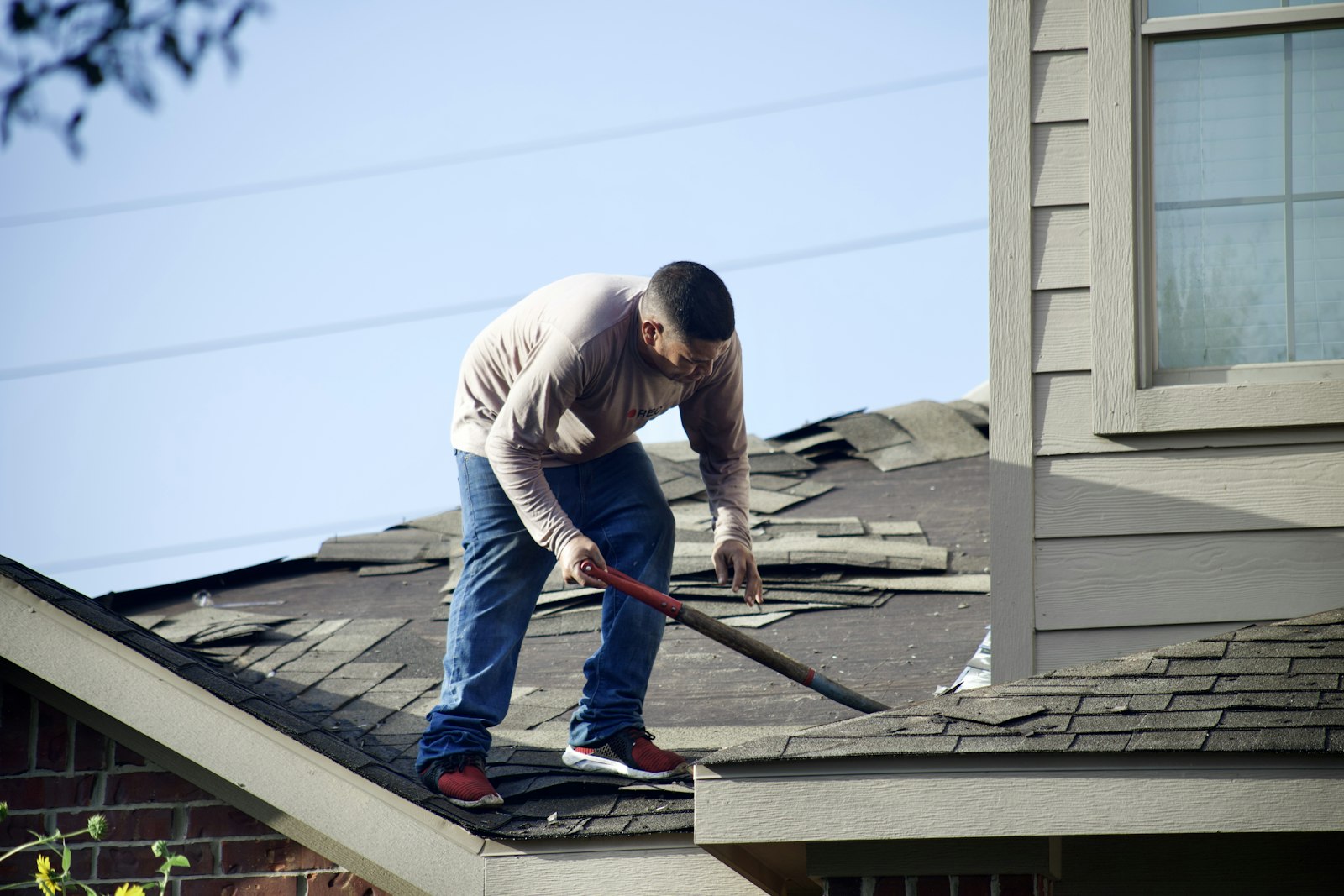
If you own a home in Celina, you live in the bullseye. Collin and Denton counties sit in the heart of the most hail-active region in the United States, and a typical North Texas spring delivers multiple hail days. Most of them you sleep through. Some of them quietly cost you a roof.
The hard part about hail is that the damage is usually invisible from the ground. A storm can knock years of life off your shingles, and from the driveway the roof looks exactly the same as it did the day before. By the time a leak shows up in the ceiling, the insurance window may have already closed. Here is the builder's walkthrough for the morning after.
First: check the things you CAN see
You do not need to get on the roof, and after a storm you should not. The smartest first move is a ground-level walk around the house looking at the soft metal and screen surfaces that take hail the same way your shingles do. These are your tells:
- Gutters, downspouts, and gutter aprons. Dents and dimples in the aluminum are the clearest ground-level sign that hail hit hard enough to matter.
- The AC condenser. Walk to the outdoor unit and look at the fins. Hail dents on the coil fins are a direct readout of impact energy, and a flattened coil is its own repair worth documenting.
- Window screens, mailbox, fence caps, outdoor furniture. Spatter marks, dings, and torn screens all confirm the hail size and direction.
- The ground itself. Shingle granules washed into the gutter splash zone or collected at downspout outlets mean the storm stripped the protective surface off your shingles.
If the metal and screens around your house are dinged up, your roof took the same beating. That is your signal to act, not to climb.
The single most useful thing you can do during a storm costs nothing: when hail is falling, grab a photo of a stone next to a coin or a ruler on the patio. That timestamped image of hail size on a specific date is worth its weight in gold if you ever file a claim. Insurers fight vague claims and pay documented ones. Most homeowners never think to do it, and it is the easiest evidence you will ever collect.
What functional hail damage actually looks like
Not every mark on a shingle is a claim. Insurers and roofers distinguish between cosmetic damage and functional damage, and it matters. Functional damage is what shortens the roof's life and qualifies for coverage:
- Bruising. A soft spot you can feel like a bruise on fruit, where the hail fractured the mat under the surface. This is the big one, and it is nearly impossible to see in a photo.
- Granule loss with exposed asphalt. Dark spots where the protective granules were knocked off, leaving the black asphalt mat exposed to UV. This is what accelerates aging.
- Cracked or punctured shingles. Larger hail (golf ball and up) can crack shingles outright.
- Damaged flashing, vents, and ridge caps. The accessories take hits too, and a dented ridge vent or cracked pipe boot is a leak waiting to happen.
This is exactly why a hail roof should be assessed by someone who knows the difference. A homeowner climbing up to "take a look" usually cannot tell a functional bruise from a shadow, and risks both a fall and walking on already-compromised shingles.
Drop your email. We will send the printable APEX Home Warranty Protection Checklist, which includes the post-storm roof walk, the insurance documentation steps, and the full quarterly maintenance calendar for a North Texas home.
The insurance clock is already running
Here is the part that catches good homeowners off guard. Most Texas homeowner policies require a hail claim to be filed within one year of the date of loss, and some policies are tighter. Because hail damage hides, a May storm can go completely unnoticed until a leak appears the following summer, after the window has quietly closed and the policy will not pay.
Protect yourself with a simple discipline:
- Log the storm date. When a real hailstorm hits your area, write down the date and save your timestamped hail photo.
- Get the roof assessed within weeks. Not years. The shorter the gap between storm and assessment, the cleaner your claim.
- Only file when damage clearly exceeds your deductible. A documented, above-deductible claim for real damage is exactly what the policy is for. A tiny claim that barely clears the deductible usually is not worth the renewal scrutiny.
- Let the adjuster inspect. Your carrier will send their own adjuster. Have your documentation ready and, ideally, a trusted local contractor present to walk the roof with them.
The storm chasers are coming. Slow down.
Within days of every major North Texas hail event, out-of-state crews flood neighborhoods across Celina, Prosper, and Frisco knocking on doors. Some are legitimate. Plenty are not, and they count on urgency to get a signature before you think it through.
Walk away from any door-knocker who does these things:
- Pressures you to sign on the spot, especially an Assignment of Benefits or a contingency contract that hands them control of your claim.
- Offers to waive or "eat" your deductible. That is insurance fraud and it is illegal in Texas. If they will defraud the insurer for you, they will cut every other corner too.
- Cannot show a permanent local address, a Texas track record, or references you can actually call.
- Wants a large deposit before any work begins or any permit is pulled.
A real local contractor gives you a written assessment, lets you contact your own insurer on your own timeline, and does not need your signature today. The good ones will still be here next month. The chasers will be three states away.
Hail damage is the one home problem where the clock and the con artist arrive on the same day. Documentation beats both.
Build the habit before the storm
The homeowners who come through hail season clean are the ones who treated the roof as a maintained system, not a thing they only think about when it leaks. That means a professional roof check at least once a year, plus a same-season look after any storm that drops hail larger than a quarter. It means a documented baseline, so when damage does happen you can prove what changed and when.
For the wider seasonal picture, our complete Celina home maintenance calendar lays out what every system needs month by month, and our 12 most-missed maintenance tasks in Celina covers the items that fall off everyone's radar until they become expensive.
The roof is the most weather-exposed system on your house and the most expensive one to replace on short notice. In this part of Texas, treating it as a once-a-decade concern is how a $400 repair becomes a $20,000 surprise. A storm is going to come. The question is only whether you will have the photos, the dates, and the trusted set of eyes ready when it does.
The same storm that dents your roof dents the fins on your outdoor A/C unit and quietly chokes its efficiency. Our A/C Cleaning and Performance visit, $179, cleans the unit and runs a full performance check, so a rough hail season does not cost you cooling in July.
Book your A/C visit →